Forty Pounds of Family: What Was Hiding in My Grandmother's Sewing Machine Cabinet
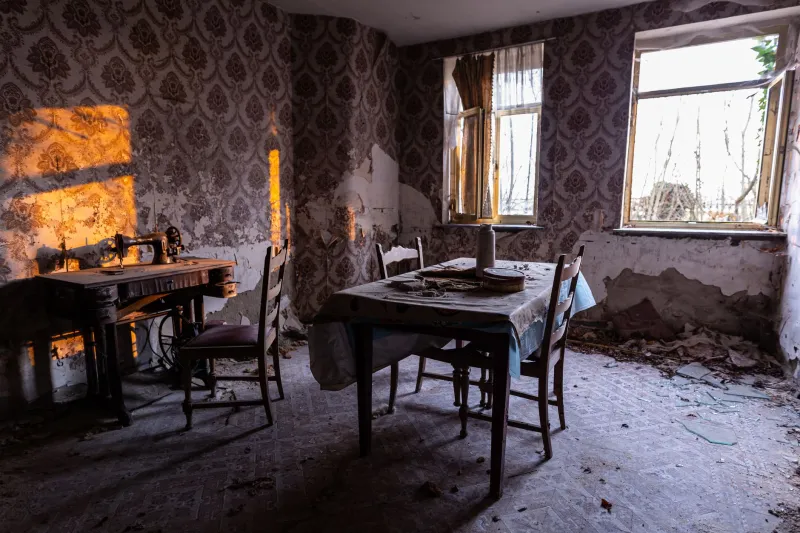
The machine arrived in the back of my cousin Ray's pickup, strapped in with more care than he'd ever shown a piece of furniture. Forty pounds of black enamel and gold decals, a 1954 Singer 201 that belonged to my grandmother, Mercedes — Nonomercy, as half of her neighborhood in San Antonio called her, which is where, depending on who in my family you ask, our site's name actually comes from.
I hadn't asked for it. I hadn't thought about it in years, honestly. But when my aunt downsized last spring, nobody else wanted the cabinet, and so it became mine, along with everything still stuffed inside it. Which turned out to be the real inheritance.
What Was in the Cabinet
People talk about sewing machines like they're just machines. Open an old cabinet, though, and you find an archive.
Inside the little side drawer, I found:
- A Greyhound ticket stub from a 1971 trip to Houston
- Four spools of thread, two of them Coats & Clark in colors that stopped being fashionable around the Reagan administration
- A folded paper pattern for a child's dress, size 6, with my aunt's name penciled on the envelope
- A small tin of buttons, at least half of which I recognize from clothes that hung in her closet
- A grocery receipt from 1988, for $11.42, on the back of which she'd written a hem measurement in blue ballpoint
That receipt stopped me for a while. Eleven dollars and forty-two cents. A hem measurement in her handwriting, the same slanted script that showed up on every birthday card she ever sent me. It's a strange thing, holding a stranger's errand and realizing the stranger raised your mother.
Getting Her Running Again
I want to be honest: I almost didn't restore the machine. I almost put it in the corner as decor, because that's what you do with heirlooms now, right? You display them. You do not use them.
That felt wrong. Nonomercy used everything until it fell apart. So I spent a weekend and about sixty dollars bringing the Singer back to life, and if you've got an old machine in your family, here's the path:
1. Don't polish the decals. The gold scrollwork on old Singers was applied before the clear coat, so aggressive cleaning strips it permanently. A soft, barely damp cloth is all it gets.
2. Replace the belt and the wiring. Original wiring on a seventy-year-old machine is a genuine fire hazard. A new motor belt runs about ten bucks online; rewiring or replacing the foot controller is another twenty. There are YouTube videos for every model imaginable — the vintage sewing machine community is one of the internet's genuinely wholesome corners.
3. Oil the right spots, and only the right spots. Old machines have specific oil points, usually marked in the manual, which you can find scanned for free. Sewing machine oil only. No WD-40, ever, unless you want to spend your weekend stripping it all back out.
4. New needle, new everything else. A fresh needle, fresh thread, and a practice sandwich of scrap fabric before you touch anything you care about.
Mine needed a new belt and a lot of patience. Then, on a Tuesday evening, it stitched. The sound is different from a modern machine — lower, slower, more like a purr than a whine. My mother, visiting that weekend, heard it from the kitchen and came in and just stood there.
"That's what growing up sounded like," she said.
Why an Old Machine Changes What You Make
Here's what surprised me: the machine changed my sewing, not just my sentimentality.
A 201 only does one stitch. Straight. That's it. No zigzag, no buttonhole, no automatic anything. And that constraint turns out to be a kind of freedom. You stop fussing over settings and start paying attention to the fabric. You learn to press seams properly because the machine won't forgive you for skipping it. You slow down, because the machine is slow — around 1,100 stitches a minute, about half of a modern plastic wonder.
There's also the matter of what it's built for. My grandmother hemmed work pants on this machine. She made prom dresses on it. It sewed through denim and taffeta and, according to family legend, a leather purse strap, and it did all of it because it's all steel and weighs as much as a toddler. Heirloom tools carry that record. Every nick and needle scar in the cabinet top is a project somebody finished.
Passing It Forward
My niece started coming over on Sundays to learn to sew, and I teach her on the Singer, which means she's learning on the same machine her great-great-grandmother bought, possibly secondhand even then. When she sews a crooked seam, I tell her what Nonomercy apparently always said, per my mother: "Rip it and go again. The fabric doesn't care."
The ticket stub lives in the drawer still. So does the receipt. I added my own thing to the collection — a swatch of the first fabric we cut into together, with the date on it. Somebody's going to open this drawer in forty years and find all of us in there.
Forty pounds is heavy. It's supposed to be.