What a Folding Table and a Cash Box Taught Me That No Online Course Could
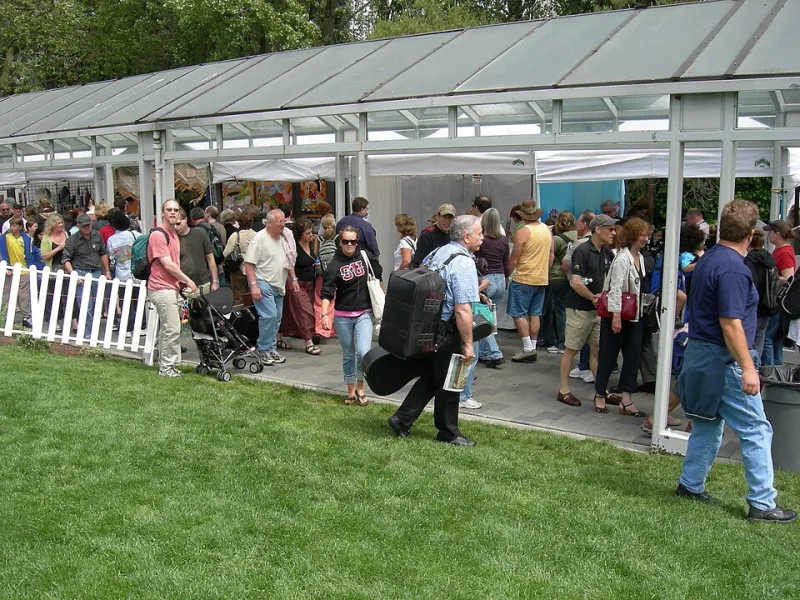
Photo: Joe Mabel, CC BY-SA 3.0, via Wikimedia Commons
Last spring, I did the thing every online creator says they'll do eventually: I took my work offline. One folding table, a borrowed canopy, a cash box from a hardware store, and a Saturday morning slot at the farmers market two towns over.
I'd watched the YouTube videos. I'd read the threads. None of it prepared me for the actual thing. So here's the real list — the stuff you only learn standing behind a table while the smell of kettle corn drifts over your inventory.
1. Arrive Before the Vendors, Not the Customers
The setup window is chaos. Get there early enough to park close, because you will be carrying six totes from a lot that's somehow always the farthest one.
2. Price Everything Before You Arrive
I thought I'd "feel it out." Big mistake. People ask prices while you're mid-transaction with someone else, and if you hesitate, they walk. Small sticker tags, decided at home, in daylight, with a calculator.
3. Somebody Will Haggle. Decide Your Answer in Advance.
One man spent twenty minutes working me on a piece marked forty dollars. Not rudely — almost warmly, like it was a dance we both knew. I held my price, he bought it anyway, and we nodded at each other like boxers after a bout. Know your floor before the conversation starts.
4. The Regulars Are Everything
By week four, a woman named Doreen was buying something every Saturday — sometimes a five-dollar print, sometimes nothing bigger than a sticker. She told two friends. Those friends told more. Your best marketing channel is a person holding your work in a parking lot.
5. Bring a Buddy for Bathroom Breaks
Nobody mentions this. You cannot leave your booth. Beg, borrow, or bribe a friend for at least the first market.
6. Square Readers Die at the Worst Moment
Cell service at the market was spotty. My card reader spun and spun while a line formed. Bring a backup plan — offline card mode, or honestly, a sign that says "cash discount."
7. Talk Less, Watch More
My instinct was to narrate every piece. What actually worked was a smile, a hello, and then silence while people looked. Let the work do the opening line.
8. Weather Is a Business Partner Now
Wind is the enemy of lightweight displays. Sun will warp things on your table. I now check the forecast like a farmer, because basically, I am one.
9. Sales Follow a Rhythm
First hour: browsers. Mid-morning: the rush. Last thirty minutes: the deal-hunters. Don't pack up early — some of my best sales happened while I was literally breaking down the table.
10. It Changes How You Make Things
This one surprised me most. Watching strangers react — what they picked up, what they skimmed past — rewired how I think about my work. Not into chasing trends, but into seeing it through other eyes. No dashboard or analytics report has ever done that for me.
Why Bother, When the Internet Exists?
Because an algorithm shows your work to a number. A person at a market shows you their face. In a world where every sale is mediated by a feed, ten minutes of real conversation with someone holding something you made hits different.
Bring the folding table. It'll be ugly. That's fine. It's a start.